Elementor websites, built fast and easy to edit yourself.
Elementor with a proper style system behind it: global fonts and colours, reusable templates, and the theme builder handling headers, footers and dynamic pages. After handoff your team edits everything by dragging, and I tune performance on top since Elementor ships more code than a lean builder.

What you get with an Elementor build
What is an Elementor website?
Elementor is the most widely used visual builder for WordPress. A theme builder for headers, footers, archive and single templates, plus advanced widgets, forms, popups and dynamic content, comes from either an Elementor Pro licence or the Crocoblock plugin set. Because so many people already know the interface, your team, or your next developer, can pick the site up without a learning curve.
What is included when I build your Elementor site?
You get a custom Elementor build from your design, or one I design with you first. Global fonts, colours and typography are set site-wide, so a brand change happens in one place rather than page by page. Repeating content uses reusable templates and loop templates, the theme builder handles the site-wide layout, and forms and popups are wired and tested. I supply the licence key for the pro-level plugin set (Elementor Pro or Crocoblock, your choice). On top of that comes a performance pass: unused widgets and features switched off, assets loaded per page, images optimised, fonts and scripts tuned. You also get a short screen-recorded walkthrough of the parts your team will edit.
Who it is best for
Businesses that want to self-manage after launch, projects on a tight timeline, and sites that need frequent content or layout changes without a developer on call. If raw performance is the priority, I would point you at Bricks or a custom build instead. I also build in Divi.
Every Elementor project ships with this.
- Custom Elementor build from your design, or design handled together
- Global fonts, colours and typography set site-wide
- Reusable templates and loop templates for repeating content
- Theme builder templates, with a licence key (Elementor Pro or Crocoblock)
- Performance pass: unused widgets off, images, fonts and scripts tuned
- Semantic structure and JSON-LD schema baked in
- Contact and lead forms wired and tested, popups if needed
- Editor walkthrough recording for your team (if agreed)
Get the website for free.
Commit to keeping it maintained and the build itself is on me.
8 months of maintenance
$99 / month
Sign up for 8 months of maintenance and the build is free. Updates, backups, security patching and speed monitoring included.
See pricingHosting + maintenance, 6 months
$115 / month
Take managed hosting and maintenance together for 6 months and the build is free. Hosting, updates, backups, security and monitoring in one plan.
See pricingFast and findable, not bolted on after.
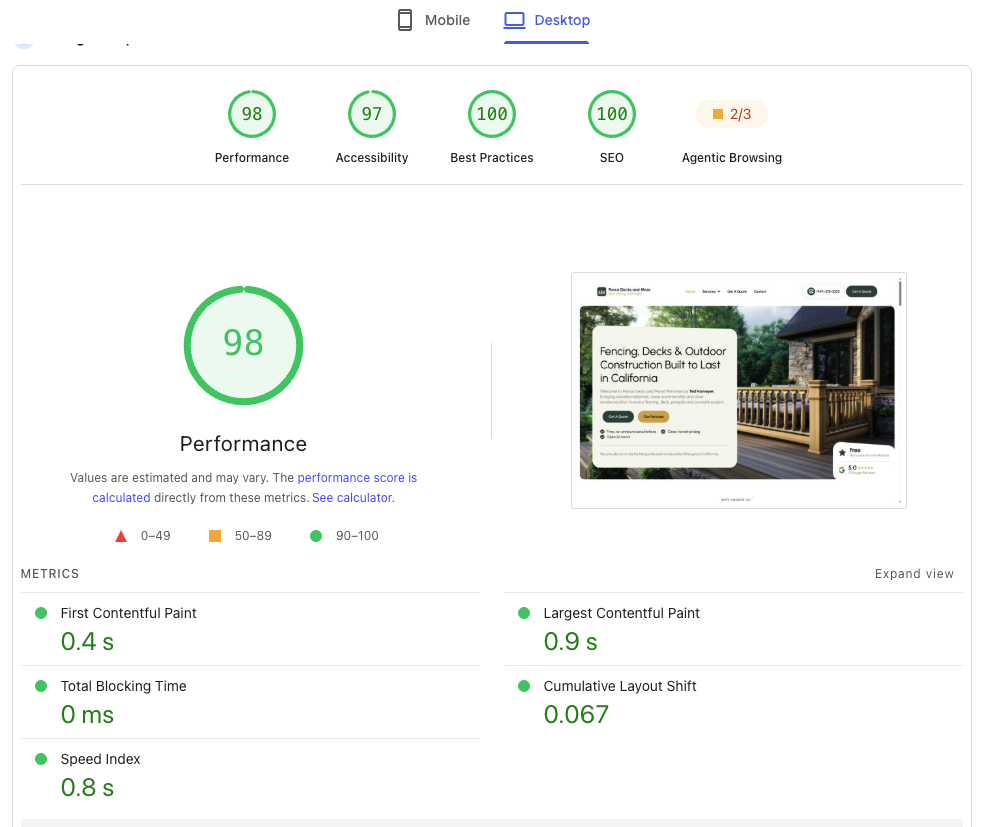
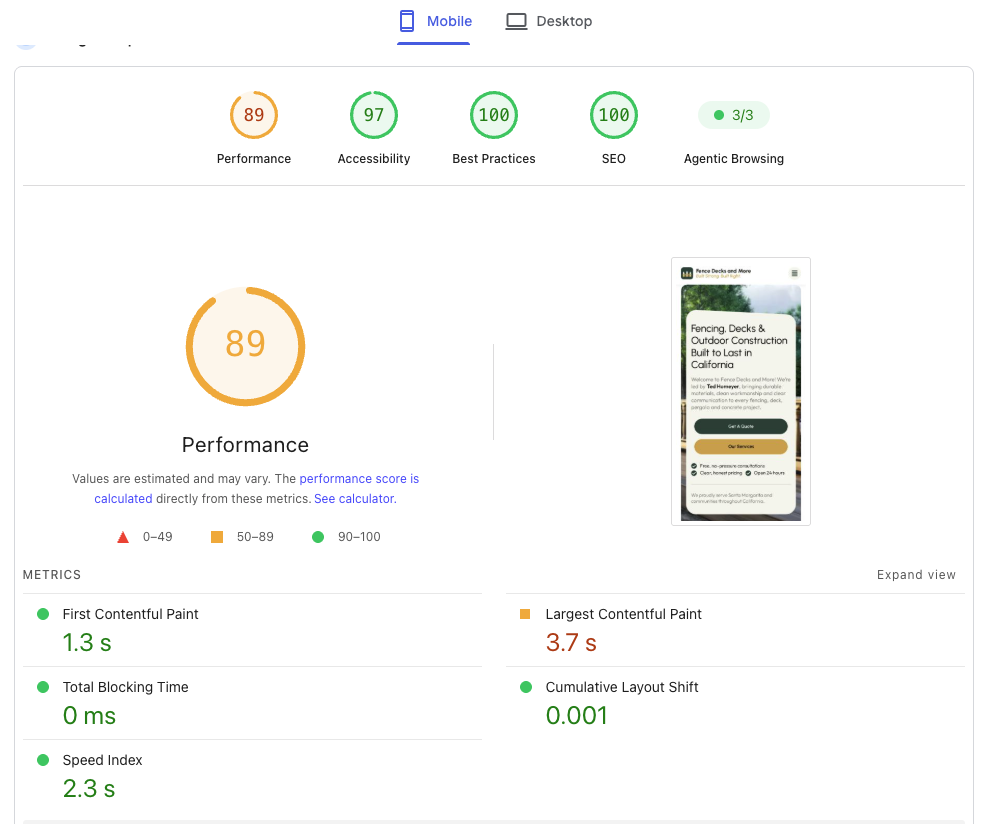
90+ PageSpeed, with Elementor tuned down
Elementor ships more CSS and JavaScript than a lean builder, so speed here is deliberate work: unused widgets and features switched off, assets loaded only on the pages that need them, plus image formats, font loading and script deferral handled on top.
Straight talk: an Elementor site will not be as light as Bricks or a hand-coded theme. With the tuning above, desktop scores come back green and mobile Performance usually sits in the high 80s, the fast end of the "good" band, with load and layout stability green. If you need the lightest possible stack, Bricks or custom is the better call. The screenshots show a real example.
SEO and AEO from the first commit
- Clean semantic HTML and one clear H1 per page
- JSON-LD schema per template (Service, Article, FAQ, Breadcrumb)
- Per-page titles, meta and Open Graph
- XML sitemap, image alt text, sensible internal linking
- Answers written as real questions so AI engines can quote them
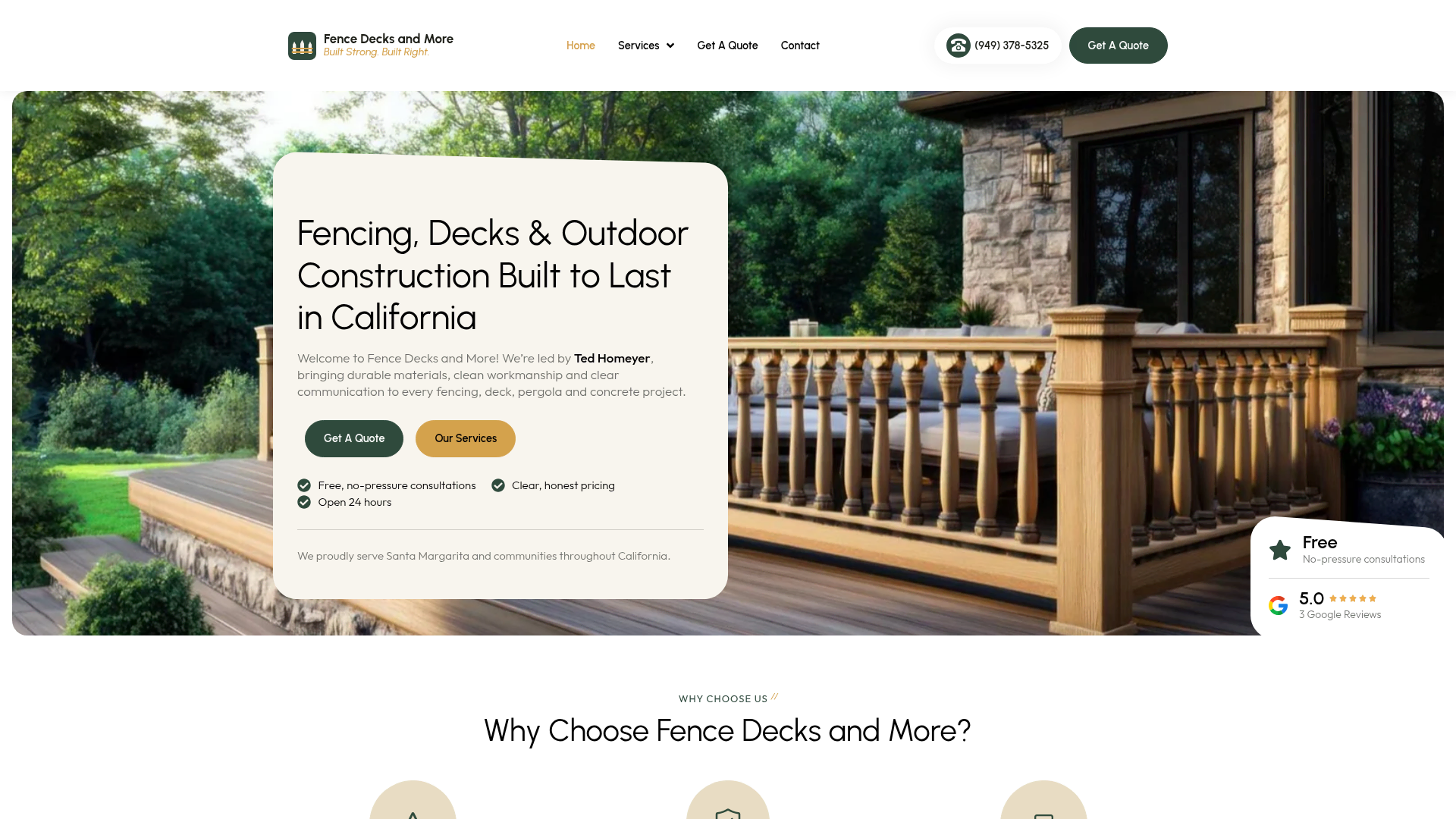
Elementor sites I've shipped.

Elementor, answered.
How long does an Elementor site take?
Most run three to five weeks: about a week for design sign-off, two to three weeks for the build, then a review round. Elementor's template library keeps standard pages quick; custom layouts add time.
Can I edit the site myself after handoff?
Yes, that is the main reason to choose Elementor. Global fonts and colours mean site-wide changes happen in one place, and reusable templates keep repeating sections consistent. You get a recorded walkthrough covering the parts your team will touch.
Will Elementor slow my site down?
It adds more CSS and JavaScript than a lean builder, so I tune it: unused widgets and features off, per-page asset loading, optimised images, deferred scripts. Desktop lands green and mobile lands in the "good" band. For the lightest possible stack, Bricks or a custom build is better.
Do I need an Elementor Pro licence?
Not necessarily. The pro-level widgets and the theme builder need either an Elementor Pro licence or the Crocoblock plugin set. I use Crocoblock on most builds and provide a licence key for your site; you can choose Elementor Pro instead if you prefer. Either one is yours and renews yearly. If you take a maintenance plan that includes hosting, I cover the Elementor Pro licence for as long as that plan runs.
Can you rebuild my existing site in Elementor without losing SEO?
Yes. I map every current URL to its new equivalent, keep titles and headings intact, carry over metadata, and set 301 redirects so rankings transfer.
Do you provide support after launch?
Yes, either ad hoc or on a monthly retainer covering updates, backups, security and speed monitoring.
What it costs.
A typical Elementor marketing site runs about $250–$600. Fixed-price or hourly, both work through Upwork with escrow.
What moves the number
- How many unique page templates you need
- Whether design is provided or created from scratch
- How much existing content has to be migrated
- Integrations: CRM, booking, payments, membership
- Timeline: genuine rush work costs more
Let's build your Elementor site.
Send me your current site or a rough brief on Upwork, and I'll come back with a plan and a number. Usually within one business day.